EU News: Modernizing Greek Schools - The EU’s New Initiative
NEWS PIECES
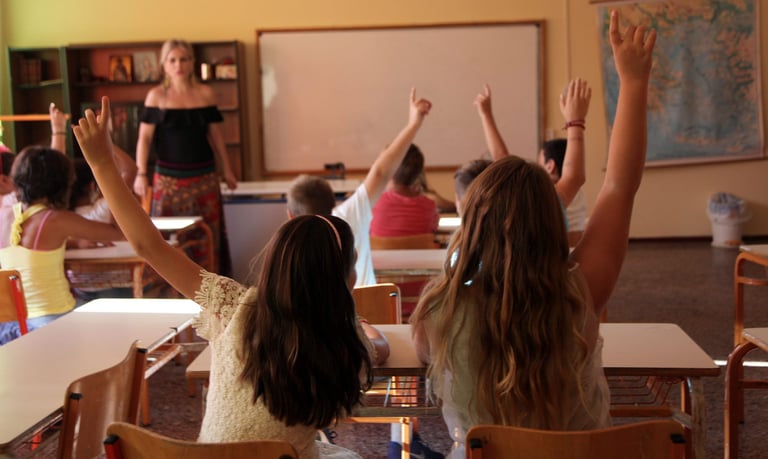
In this week's EU news roundup, 11th-grader Elena Papadimitriou explores the massive European investments transforming Greek education. Discover how billions in funding from the Greece 2.0 and ESPA 2021-2027 programs are modernizing classrooms with new digital tools, renovating aging infrastructure, and empowering the next generation of students and teachers.
Image Source: tovima.com
In 2021, through the Recovery Fund's financing program (Greece 2.0), the European Union announced a new initiative aimed at supporting the Greek school community. This program focuses on improving educational conditions and providing more learning opportunities for students, utilizing European funds totalling 1.1 billion euros. Following consultations between Greece and the European Commission, officials emphasized the need for schools to evolve to better meet the modern needs of students.
The Ministry of Education clarified that the funding will be directed towards the modernization of educational equipment, such as the procurement of computers, interactive whiteboards, robotics and STEM equipment, vouchers for the purchase of technological equipment by teachers and affected families, and digital services like e-Schools.
Furthermore, renovations of older building infrastructure are planned through the "Marietta Giannakou" Program, along with the creation of computer labs and the upgrading of internet connections, particularly in remote areas, to ensure high-quality teaching conditions.
Given that the European Union recognizes education as the foundation for the youth's future, many member states are intensifying their efforts to integrate technology into the learning process.
News of the new program brought satisfaction to students and educators. The use of modern tools makes lessons more engaging and comprehensible, while simultaneously fostering creativity in the classroom. However, some voices point out that structural changes are also required, such as reducing the number of students per class and increasing the teaching staff.
The NSRF (ESPA) 2021-2027 funding program, with a total budget of 4.16 billion euros, is directed towards Human Resources and Social Cohesion. As this is the largest investment made in human resources in recent years, it secures funds for remedial teaching, the operation of Special Education School Units, the hiring of substitute teachers and professors, foreign language learning, apprenticeship programs, and student scholarships.
Overall, there is optimism that this effort will significantly strengthen Greek schools, offering young people a modern and upgraded learning environment.
Experts in education estimate that such initiatives provide substantial support, enabling students to develop digital skills through interactive methods. At the same time, the European Union aims to train educators through seminars so they can fully utilize new technologies, thereby upgrading the quality of education in the country.
For their part, parents view these changes positively as preparation for the demands of modern society, although they emphasize that success depends on the proper and organized implementation of the plan.
SOURCES
Wikipedia - European Union
Wikipedia - Erasmus+
European Commission - Education and Training
European Commission - Skills, Education and Training
Hellenic Ministry of Education, Religious Affairs and Sports (EL)
Hellenic Republic - Greece 2.0
Hellenic Ministry of National Economy and Finance - NSRF (ESPA) 2021-2027 (EL)
Hellenic Ministry of Education, Religious Affairs and Sports - "Marietta Giannakou" Program (EL)
Author: Elena Papadimitriou
READ MORE:
Young European Diplomats © 2026
Young European Diplomats empowers young people to drive change and to become active citizens.