Past Week in the EU: EU Secures Gibraltar Agreement Amid Ongoing Energy Crisis
NEWS PIECES
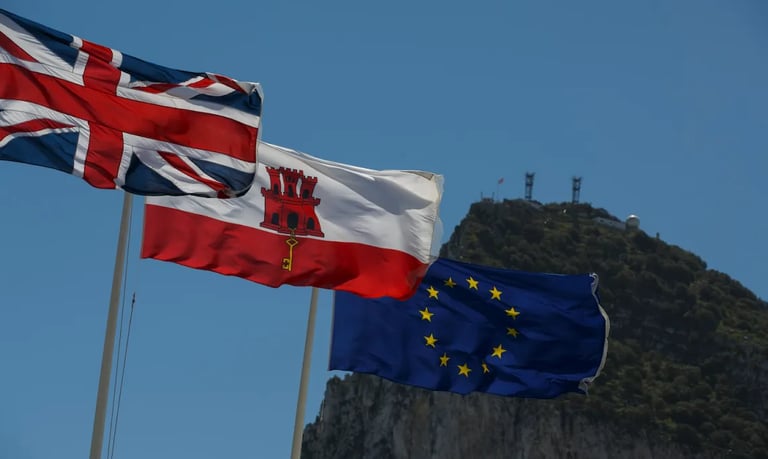
In this week's EU news roundup, 11th-grader Margarita Gkoziaka breaks down a week of diplomatic milestones and economic anxiety for Europe. Dive into the details of the historic EU-UK agreement securing open borders in Gibraltar, and learn why escalating tensions in the Middle East have Brussels bracing for critically low natural gas reserves and the possibility of fuel rationing.
Image Source: Ellul & Cruz
The past week was intense for the European Union. The EU-UK Agreement and the energy scarcity dominated the European news cycle.
The Committee of Permanent Representatives (Coreper) have agreed on the 1st of April 2026, on the texts of the agreement and decisions of signature and provisional application of the Agreement between the EU and the UK in respect of Gibraltar. The texts will be concluded, and the Agreement is expected to enter into provisional application on 15 July 2026.
The main objective of the EU-UK agreement in respect of Gibraltar is to secure the future prosperity of the whole region. This objective will be reached by removing all physical barriers to persons and goods circulating between Spain and Gibraltar, while fully safeguarding Schengen, the EU's Single Market, and its Customs Union.
The European Union is entering the vortex of an energy shock, with Brussels now examining “all possibilities,” even measures that were previously considered extreme, such as the imposition of fuel rationing. The worsening situation in the Middle East, attacks on energy infrastructure and the almost complete disruption in the Strait of Hormuz are triggering turbulence in international markets, reinforcing fear of shortages, as well as maintaining prices at high levels. However, the biggest challenge facing the EU is the security of gas supply. In conditions of geopolitical instability that we live in, Europe will have to replenish its natural gas reserves for the new winter season, which are at unusually low levels. They have fallen to 28.1% of total capacity, the lowest in the last 15 years.
Natural gas sufficiency will also determine Europe’s electricity sufficiency, with countries in which imported fuel contributes a larger percentage to the electricity generation mix being most affected.
SOURCES
European Council/Council of the European Union: https://www.consilium.europa.eu/en/press/press-releases/2026/04/01/eu-uk-relations-member-states-greenlight-eu-uk-deal-on-gibraltar/
Kathimerini: https://www.ekathimerini.com/economy/energy/1300148/no-fuel-supply-problem-for-greece-but-eu-worries/
Author: Margarita Gkoziaka
Young European Diplomats © 2026
Young European Diplomats empowers young people to drive change and to become active citizens.
Reframe your inbox
Subscribe to our weekly newsletter and never miss any updates!
We care about your data in our privacy policy.