
Past Week in the EU: Major Changes in the EU
NEWS PIECES
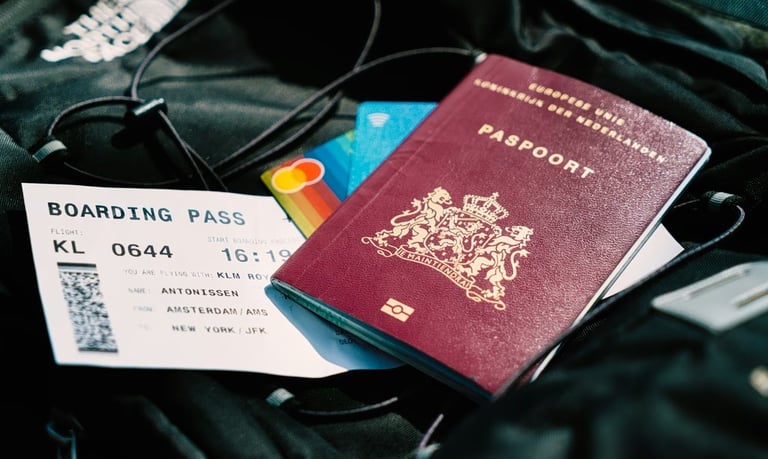

In this week's EU news roundup, 11th-grader Jim Gotsis breaks down the latest major shifts shaping the continent. Read on to discover how the new digital Entry/Exit System (EES) will change summer travel, why the European Central Bank is pushing for centralized financial control, and how the DiscoverEU program is offering 18-year-olds the chance to explore Europe by train for free.
Image Source: Ta Nea
Over the past week, some significant developments took place within the European Union. Some of these affect our daily lives, while others are more economic or political in nature. Overall, it seems the European Union is trying to implement changes and improve how it operates, though member states do not always agree.
To begin with, a new measure that the EU has been promoting for some time is the Entry/Exit System (EES). Under this system, passports will no longer be stamped, as checks will be done digitally using biometric data, such as fingerprints. This is expected to improve security and provide better control over European borders. However, there are already concerns about potential issues, such as delays and long lines at airports. This could inconvenience travellers and create so-called "travel anxiety," especially now that summer is approaching and people are travelling more for leisure abroad.
Furthermore, another important issue concerns the European Union's economy. The European Central Bank appears to want to gain more control over the financial markets than it currently has. The goal is for more decisions to be made at the European level and fewer by each country individually, enabling the Union to strengthen its competitiveness against the fierce competition from the US and China. This could help Europe become stronger and more economically stable, an effort also bolstered by the European Commission's proposal to establish the European Securities and Markets Authority (ESMA) in Paris, the regulatory body responsible for financial market regulation. However, not everyone agrees with this prospect, as some member states fear they will lose a portion of their independence and will no longer be able to make decisions on important matters on their own.
Finally, there are positive opportunities for young people, such as the launch of the first round of the DiscoverEU program for 2026. Through this initiative, 18-year-olds have the opportunity to travel for free across various European countries, primarily using the continent's interconnected railway network. This is an excellent opportunity for young people, as they can experience other cultures, see new countries, and gain completely new experiences that will be unforgettable for the rest of their lives. In addition, the program helps bring young people closer together and makes them feel like they belong to a shared European community.
Based on the above, we can see that the European Union is striving to evolve daily across various sectors. Although there are difficulties and differing opinions on these issues, these changes can contribute to a better future, provided the member states can face the challenges united. Therefore, reforms must not stop, as they give the EU the ability to evolve and support its members on multiple levels.
SOURCES
The Times - EES entry/exit system: the new rules for visiting Europe explained
Condé Nast Traveler - Visiting the EU? Expect Face Scans Instead of Passport Stamps
Reuters - ECB backs EU plan to centralise financial supervision
European Commission - Daily News 08/04/2026
Author: Jim Gotsis


READ MORE:
Young European Diplomats © 2026
Young European Diplomats empowers young people to drive change and to become active citizens.
Reframe your inbox
Subscribe to our weekly newsletter and never miss any updates!
We care about your data in our privacy policy.